

Muscle

Muscle Wasting Disease (MWD) in Cachexia and Sarcopenia

Heme Metabolism-Derived Carbon Monoxide Regulates Skeletal Muscle Function.

BACKGROUND

Heme oxygenases, HO-1 (Hmox1) and HO-2 (Hmox2), regulate skeletal muscle homeostasis by degrading heme and generating carbon monoxide (CO), a bioactive signalling molecule. Although HO-1 is known to influence muscle fibre composition and mitochondrial function, the role of HO-2 in...

🗓️ 2026-05-15
📰 Publication: Journal Of Cachexia Sarcopenia And Muscle
Read MoreHeme Metabolism-Derived Carbon Monoxide Regulates Skeletal Muscle Function.

Control of muscle mass during growth and aging: Clinical targets and pathways.

Muscle mass is a strong indicator of overall health in older adults. In healthy individuals, an adequate muscle mass is maintained through a balance between anabolic pathways, such as the mTOR pathway (mammalian target of rapamycin), and catabolic pathways, including...

🗓️ 2026-05-14
📰 Publication: Best Practice & Research Clinical Endocrinology & Metabolism
Read MoreControl of muscle mass during growth and aging: Clinical targets and pathways.

Muscle failure and risk of adverse outcomes in older adults: a derivation and multicohort validation study.

BACKGROUND

Sarcopenia is inconsistently defined, and its definition might not adequately capture muscle failure, underlying disability, and other adverse outcomes in older adults. We aimed to develop and validate an evidence-based, outcome-driven model of muscle failure.

METHODS

In this derivation and multicohort validation...

🗓️ 2026-05-13
Read MoreMuscle failure and risk of adverse outcomes in older adults: a derivation and multicohort validation study.

MyoRep: A Novel Reporter System to Detect Early Muscle Atrophy In Vitro and In Vivo.

BACKGROUND

Muscle atrophy occurs during physiological (i.e., fasting) and pathological conditions (i.e., cancer) and anticipates death. Since not all patients will undergo muscle wasting, it would be highly useful to identify them soon to intervene early. We aim to generate a...

🗓️ 2026-05-13
📰 Publication: Journal Of Cachexia Sarcopenia And Muscle
Read MoreMyoRep: A Novel Reporter System to Detect Early Muscle Atrophy In Vitro and In Vivo.

RAGE Re-Expressed at Myofibre Level Drives Muscle Wasting in Cancer Conditions.

BACKGROUND

Cancer cachexia (CC) is a highly debilitating syndrome characterized by loss of body and muscle weight affecting most advanced cancer patients. The receptor for advanced glycation end-products (RAGE) is expressed by several cell types and sustains the inflammatory response in...

🗓️ 2026-05-09
📰 Publication: Journal Of Cachexia Sarcopenia And Muscle
Read MoreRAGE Re-Expressed at Myofibre Level Drives Muscle Wasting in Cancer Conditions.

RIPK3 Inhibition Mitigates Denervated Muscle Atrophy via NOX4-Mediated Mitochondrial Restoration and Inflammation Suppression.

BACKGROUND

Peripheral nerve injury-induced muscle atrophy shares core pathophysiological features with systemic wasting disorders including cachexia and sarcopenia, yet early molecular triggers remain undefined. This study investigates the pathogenic role of receptor-interacting protein kinase 3 (RIPK3) in denervation atrophy.

METHODS

Sciatic denervation was...

🗓️ 2026-05-01
📰 Publication: Journal Of Cachexia Sarcopenia And Muscle
Read MoreRIPK3 Inhibition Mitigates Denervated Muscle Atrophy via NOX4-Mediated Mitochondrial Restoration and Inflammation Suppression.

Independent validation of the Mosamatic deep learning automated skeletal muscle and adipose tissue segmentation tool in an external Chinese cancer patient cohort.

OBJECTIVES

Deep learning neural network (DLNN)-based tools can automate body composition analysis for cancer cachexia research. We aimed to evaluate a DLNN tool trained on a European population of Chinese cancer patients.

METHODS

Computed tomography (CT) images at the 3rd lumbar vertebral (L3)...

🗓️ 2026-05-01
Read MoreIndependent validation of the Mosamatic deep learning automated skeletal muscle and adipose tissue segmentation tool in an external Chinese cancer patient cohort.

Exercise Modalities to Preserve Muscle Mass and Bone Health After Metabolic Bariatric Surgery.

BACKGROUND

Metabolic bariatric surgery (MBS) effectively reduces fat mass (FM), but how to best preserve muscle and bone mass after MBS is unknown.

OBJECTIVE

This study aimed to evaluate the effect of aerobic, resistance and combined exercise regimens on body composition, bone mineral...

🗓️ 2026-04-30
📰 Publication: Journal Of Cachexia Sarcopenia And Muscle
Read MoreExercise Modalities to Preserve Muscle Mass and Bone Health After Metabolic Bariatric Surgery.

Muscle Health and Prognosis in Patients With Cancer: New Insights.

BACKGROUND

Reduced muscle mass and impaired composition have each been independently associated with worse outcomes in patients with cancer. However, emerging evidence suggests that reduced muscle strength-namely, dynapenia-may be particularly important for prognostication, as it is easier to assess in clinical...

🗓️ 2026-04-30
📰 Publication: Journal Of Cachexia Sarcopenia And Muscle
Read MoreMuscle Health and Prognosis in Patients With Cancer: New Insights.

Deubiquitinase YOD1 Inhibition Suppresses DEX- and Denervation-Induced Muscle Atrophy Through MAFbx Destabilization.

BACKGROUNDS

Muscle atrophy, characterized by progressive loss of muscle mass and function, is driven by muscle-specific E3 ligases MAFbx and MuRF1. While transcriptional regulation of E3 ligases is documented, the mechanism of their regulation by the ubiquitin-proteasome system remains unclear. This...

🗓️ 2026-04-29
📰 Publication: Journal Of Cachexia Sarcopenia And Muscle
Read MoreDeubiquitinase YOD1 Inhibition Suppresses DEX- and Denervation-Induced Muscle Atrophy Through MAFbx Destabilization.

Gut Microbiota-Linked Benefits of Low-Intensity Pulsed Ultrasound Rejuvenate the Ageing Muscle.

BACKGROUND

Ageing is an inevitable biological process that contributes to increased prevalence of age-associated diseases, including sarcopenia, defined by progressive loss of muscle mass, functional decline and a heightened risk of injury. Developing effective interventions remains a critical clinical priority. This...

🗓️ 2026-04-21
📰 Publication: Journal Of Cachexia Sarcopenia And Muscle
Read MoreGut Microbiota-Linked Benefits of Low-Intensity Pulsed Ultrasound Rejuvenate the Ageing Muscle.

Dual Roles of Adipose Tissue in Skeletal Muscle Regeneration: Pro-Regenerative Versus Maladaptive.

Skeletal muscle accounts for approximately 40% of total body mass and is essential for locomotion, metabolic regulation and systemic homeostasis. Adipose tissue is increasingly recognized as an active component of the muscle's regenerative microenvironment. During muscle repair, adipose tissue contributes...

🗓️ 2026-04-17
📰 Publication: Journal Of Cachexia Sarcopenia And Muscle
Read MoreDual Roles of Adipose Tissue in Skeletal Muscle Regeneration: Pro-Regenerative Versus Maladaptive.

Muscle Wasting Disease (MWD) in Cachexia and Sarcopenia

Weight loss is the hallmark of any progressive acute or chronic disease state. In its extreme form, it involves a significant lean body mass (including skeletal muscle), and fat loss. Skeletal muscle provides a fundamental basis for human function, enabling locomotion and respiration. Muscle wasting is related to a poor quality of life and increased morbidity/ mortality.

Two common but distinct conditions characterized by a loss of skeletal muscle mass are sarcopenia and cachexia. Sarcopenia, cachexia, and anorexic disorders (protein-energy malnutrition) represent the major causes of muscle-wasting disorders.

It has been known for millennia that muscle and fat wasting leads to poor outcomes including deaths in chronic disease states.

It is usually accompanied by physical inactivity, decreased mobility, slow gait, and poor physical endurance which are also common features of the frailty syndrome.
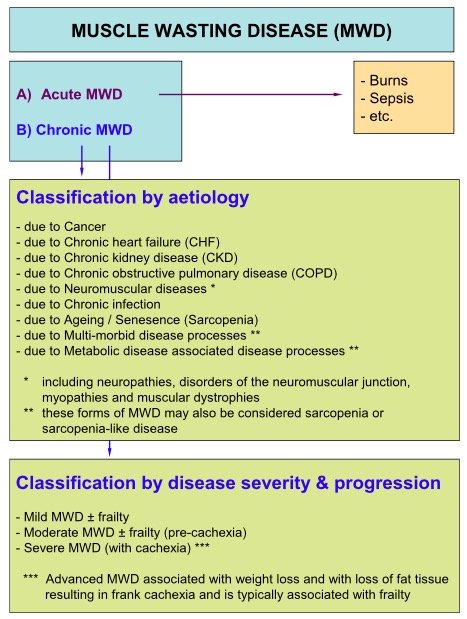
Fig. 1 – Framework for the suggested classification of MWD by disease etiology and disease progression.

Both cachexia and sarcopenia are characterized by an important muscle dysfunction that leads to increased morbidity and mortality.
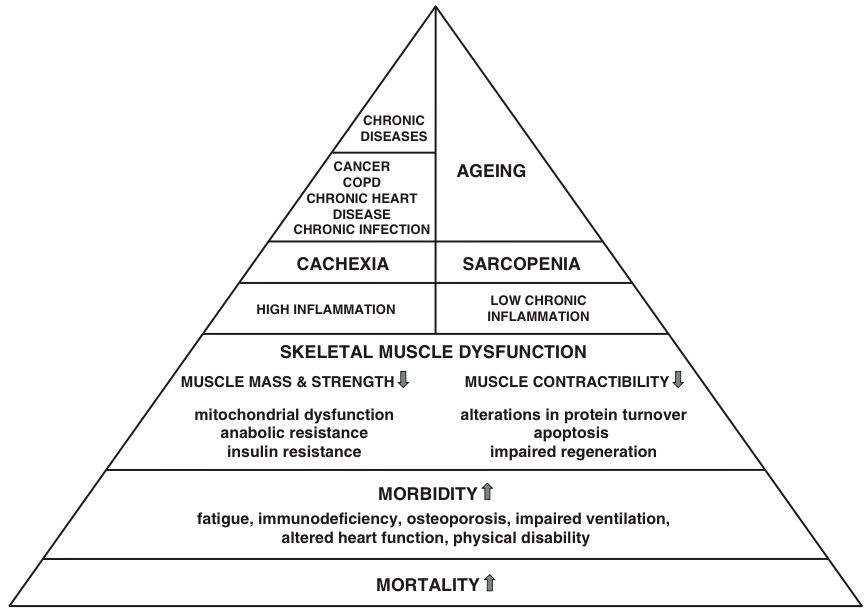
Fig. 2 – The cachexia/ sarcopenia pyramid. Both lead to muscle dysfunction.

References

Kalantar-Zadeh K, Rhee C, Sim JJ, Stenvinkel P, Anker SD, Kovesdy CP. Why cachexia kills: examining the causality of poor outcomes in wasting conditions. J Cachexia Sarcopenia Muscle 2013; 4: 89–94.

Evans WJ, Morley JE, Argilés J, Bales C, Baracos V, Guttridge D, et al. Cachexia: a new definition. Clin Nutr 2008; 27: 793–799.

Anker SD, Coats AJS, Morley JE, Rosano G, Bernabei R, Haehling S, et al. Muscle wasting disease: a proposal for a new disease classification. J Cachexia Sarcopenia Muscle 2014; 5: 1–3.

Argiles JM, Busquets S, Stemmler B, López-Soriano FJ. Cachexia and sarcopenia: mechanisms and potential targets for intervention. Current Opinion in Pharmacology 2015; 22: 100–106.

Bowen TS, Schuler G, Adams V. Skeletal muscle wasting in cachexia and sarcopenia: molecular pathophysiology and impact of exercise training. J Cachexia Sarcopenia Muscle 2015; 6: 197–207.

Subscribe to the SCWD Newsletter

Stay Informed with the Latest Updates and Exclusive Insights!